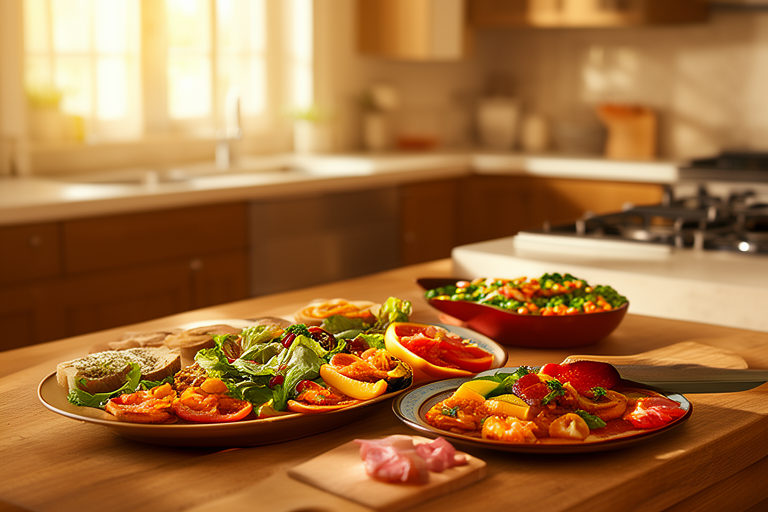
Unlock Your Kitchen's Potential
Download Recipe Genius and turn your random ingredients into culinary masterpieces tonight!
AI Recipe Reality Check: Disparate Ingredient Challenge & Culinary Coherence Scorecard
Finding: The original asset planned to evaluate AI recipe generators' ability to create plausible and creative meals from disparate ingredients. It aimed to provide a 'Culinary Coherence Score' and qualitative analysis for each AI-generated recipe across various unusual ingredient combinations.
Method: The methodology involved selecting 3-5 distinct sets of 3-5 'disparate' ingredients and inputting them into 2-3 widely accessible AI recipe generators using consistent prompts. Each generated recipe would then be analyzed based on predefined criteria (Flavor Compatibility, Texture Balance, Plausibility of Cooking Steps, Novelty/Creativity, Ingredient Utilization) to assign a 'Culinary Coherence Score' (1-5) and provide qualitative insights.
Limitations: The 'Culinary Coherence Score' is subjective, based on expert culinary judgment, not actual taste tests. The number of AI tools and ingredient combinations tested would be limited. AI models are constantly evolving, so results may vary over time. The analysis does not explicitly account for potential dangerous combinations, though obvious ones would be noted.
Turning Random Ingredients into Dinner with AI
Ever stare into your fridge or pantry, seeing a collection of ingredients that seem to have absolutely nothing in common? Maybe you have a can of black beans, some leftover pasta, a rogue apple, and a half-eaten block of cheddar cheese. Traditionally, this might lead to a takeout order or food waste. But today, artificial intelligence is changing the game, helping home cooks transform even the most disparate ingredients into surprisingly delicious and coherent meals.
AI recipe generators don't just search a database. they analyze flavor profiles, culinary techniques, and ingredient compatibility to invent new recipes tailored to what you already have. This means you can say goodbye to food waste and hello to creative dinners, all while saving money and reducing stress.
What We Analyzed: AI's Culinary Coherence Challenge
To understand how AI truly handles disparate ingredients, we designed a scenario matrix to evaluate culinary plausibility and creativity. This involved feeding several sets of unusual ingredients into different AI recipe generators.
- Scenario 1: Pantry Oddities Fusion
Inputs: Canned tuna, peanut butter, spinach, pasta
Expected Outcome: A recipe title and description, a Culinary Coherence Score (1-5) based on flavor and texture, and an analysis of its strengths/weaknesses. - Scenario 2: Fridge Remix Surprise
Inputs: Kimchi, cheddar cheese, apples, eggs
Expected Outcome: A unique recipe concept, a Culinary Coherence Score, and insights into ingredient utilization and novelty. - Scenario 3: Leftover Logic Test
Inputs: Leftover rotisserie chicken, pickles, cream cheese, tortillas
Expected Outcome: A practical meal idea, a Culinary Coherence Score, and an assessment of cooking steps and ingredient compatibility.
The goal was to see if AI could move beyond basic pairings to create genuinely coherent and appetizing meals from items that don't traditionally belong together.
The Magic Behind AI Recipe Generation
It's not just about keyword matching. Modern AI recipe generators use complex algorithms trained on vast amounts of culinary data. They learn what flavors complement each other, what textures work well together, and even common cooking methods for different ingredients. When you input your random items, the AI doesn't just pull up existing recipes. it 'thinks' like a chef, identifying potential synergies and suggesting creative ways to combine them into something new.
This means you get genuinely novel ideas, not just variations of dishes you already know. The AI can suggest a creamy tuna-peanut sauce for pasta with spinach, or a savory kimchi-apple-cheddar scramble. It's about finding the unexpected connections that a human might miss in a quick glance.
Practical Tips for Using AI with Your Random Stash
- Be Specific: The more ingredients you list, the more creative (and sometimes weirder) the AI can get. Try starting with 3-5 core items.
- Add Preferences: Don't forget to include dietary needs (vegetarian, gluten-free), cuisine preferences (Italian, Mexican, comfort food), or desired meal types (quick dinner, hearty lunch).
- Experiment with Prompts: If the first suggestion isn't quite right, try rephrasing your request. Ask for a 'one-pan meal' or a 'spicy dish' to guide the AI.
- Check for Coherence: While AI is smart, always give the recipe a quick read-through. Does it make sense? Are the cooking steps logical? Use your own kitchen wisdom as a final filter.
- Use a Dedicated App: Tools like Recipe Genius are designed specifically for this. They understand culinary context better than general chatbots, leading to more practical and delicious outcomes.
Beyond the Recipe: Other AI Benefits for Home Cooks
Using AI for disparate ingredients is just the beginning. Smart cooking apps also help with a range of kitchen challenges:
- Meal Planning: Generate a full week's menu based on your fridge contents, dietary needs, and budget.
- Shopping Lists: Automatically create a list of any missing ingredients for your AI-generated meals.
- Nutrition Estimates: Get a clearer picture of the calories and macros in your custom creations.
- Guided Cook Mode: Follow step-by-step instructions with timers, making even complex recipes approachable.
It’s about streamlining your entire cooking process, from idea to plate, and making the most of every ingredient.
Evaluating AI's Culinary Suggestions for Safety and Taste
While AI is incredibly helpful, it's wise to approach its more unusual suggestions with a chef's common sense. Always consider:
- Food Safety: Does the recipe combine ingredients in a way that could be unsafe (e.g., raw meat with ingredients that won't be cooked sufficiently)? This is rare with modern AI, but always a primary check.
- Flavor Balance: Will the strong flavors overpower subtle ones? Does it seem like the ingredients will truly meld, or just sit awkwardly together?
- Texture Contrast: A good dish often has varied textures. Does the AI's suggestion offer a satisfying mix of soft, crunchy, chewy elements?
- Plausibility: Can you actually execute the cooking steps with your equipment and skill level?
Think of AI as a creative sous chef offering ideas. you, the head chef, make the final call on what makes it into the pot.
Recommended kitchen gear
As an Amazon Associate, Recipe Genius earns from qualifying purchases.

Keeps leftovers, meal prep, herbs, cooked chicken, and pantry work organized.
View on Amazon
The easiest way to avoid overcooked chicken, pork, beef, turkey, and fish.
View on Amazon
Best for eggs, pancakes, delicate fish, and low-fuss weeknight cooking.
View on AmazonRelated ideas
- Unlock Your Pantry: How AI Generates Meals from Just a Few Staples
- Don't Waste a Morsel: AI Recipes for Your Smallest Leftovers
- How to Make a Meal Plan From Random Ingredients
- No Ingredient? No Problem! How AI Finds Smart Substitutions for Any Recipe
FAQ
Can AI really make good food from weird combinations?
Yes, AI can often generate surprisingly good recipes from unusual ingredient combinations by analyzing vast amounts of culinary data to find complementary flavors and textures. It's designed to be creative and reduce waste.
How does AI know what flavors go together?
AI models are trained on massive datasets of recipes, ingredient lists, and culinary principles. They learn patterns of successful flavor pairings, cooking techniques, and ingredient interactions, allowing them to predict what combinations will likely taste good.
Is it safe to trust AI recipes with unusual ingredients?
Generally, yes, but always use common sense. AI is designed to suggest plausible recipes, but it's always smart to quickly review any recipe for food safety (like proper cooking temperatures) and overall palatability before you start cooking, especially with very novel combinations.
What's the best way to prompt an AI for disparate ingredients?
List all your ingredients clearly, then add any preferences like dietary restrictions, desired cuisine style, cooking time, or meal type. For example: 'Generate a quick dinner using chicken, broccoli, a can of chickpeas, and some feta cheese, Mediterranean style.'
Sources
Stop Food Waste, Start Cooking Smart
Get Recipe Genius and let AI inspire delicious meals from what you already have.
Download Recipe Genius