Turn Your Ingredients into Dinner
Open Recipe Genius, enter what you have, and get practical meal ideas for your time, tools, and appetite.
What we analyzed
Finding: A four-part one-pan formula can cover several common weeknight situations by swapping the protein, vegetable, pantry staple, and finishing flavor. The examples use transparent ingredient and time assumptions rather than performance claims.
Method: We created three illustrative combinations from common pantry and refrigerator ingredients, then estimated cooking order and elapsed time from typical home-kitchen steps. We cross-checked the planning and leftover-safety guidance against USDA MyPlate, USDA Food Safety and Inspection Service, and EPA household food-waste guidance.
Limitations: Cooking time varies with pan size, ingredient temperature, cut size, and equipment. The scenarios are editorial examples, not a controlled cooking test, nutrition analysis, or measurement of Recipe Genius users.
The easiest one-pan dinner formula
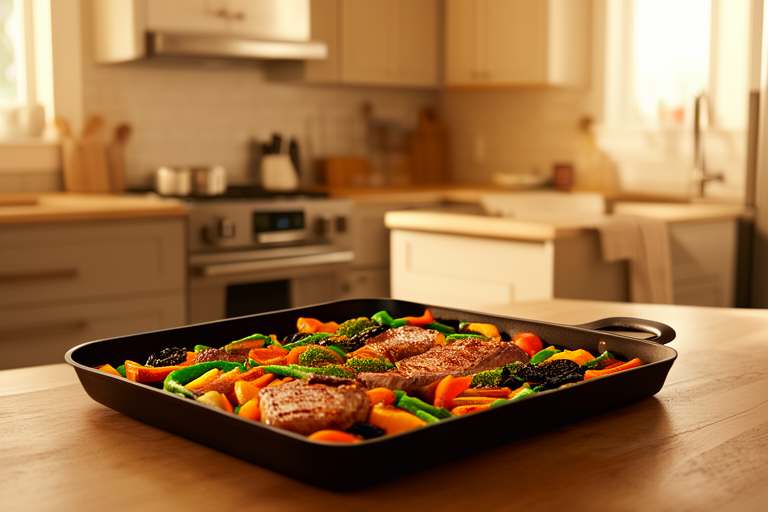
When you’re too tired to cook, use this four-part formula: one protein, one or two vegetables, one filling pantry staple, and one bold finishing flavor. Roast, sauté, or simmer those pieces in one pan until the protein is cooked and the vegetables are tender. You get a real dinner without starting with a recipe that demands a full shopping trip.
Try chicken thighs with frozen broccoli, cooked rice, and lemon-garlic yogurt. Or use chickpeas, peppers, canned tomatoes, and pasta. The formula is a starting point, not a rulebook. Your fridge and pantry decide the ingredients.
What we analyzed
We compared three realistic tired-night setups using the same formula. These are editorial estimates, not customer or app-usage data. Each scenario assumes one pan, ingredients already on hand, and a target of about 30 minutes.
- Chicken tray dinner: 1 pound boneless chicken thighs, 3 cups frozen broccoli, 2 cups cooked rice, and 10 minutes of chopping and seasoning. Outcome: one roasted protein-and-vegetable dinner with rice reheated in the same pan during the final few minutes.
- Bean and pasta skillet: 1 can drained beans, 1 cup dry short pasta, 1 can crushed tomatoes, and 2 cups water or broth. Outcome: a one-pan tomato pasta that uses shelf-stable ingredients and needs roughly 25 minutes of simmering.
- Egg and potato hash: 1 pound diced cooked potatoes, 4 eggs, 2 cups leftover vegetables, and a spoonful of salsa or cheese. Outcome: a flexible skillet meal in about 15 minutes, with the eggs added at the end so they stay tender.
Choose the building blocks from your kitchen
For protein, look for chicken thighs, ground meat, eggs, tofu, canned beans, or leftover cooked meat. For vegetables, use whatever needs attention first: broccoli, peppers, carrots, spinach, cabbage, frozen peas, or a bag of mixed vegetables. Your pantry staple can be rice, pasta, potatoes, tortillas, bread, or canned tomatoes.
Think about cooking speed before you turn on the heat. Cut dense vegetables smaller, use quick-cooking proteins, and thaw frozen meat safely in advance. If one ingredient takes much longer than the others, start it first and add the rest later.
Make one pan taste like three different dinners
The finishing flavor does most of the work. Add salsa and cumin for a taco-style skillet, soy sauce and ginger for a savory rice bowl, pesto and lemon for vegetables with pasta, or curry powder and coconut milk for a quick simmer. A sauce, spice blend, acid, or fresh herb can move the same basic ingredients in a completely different direction.
- Bright: lemon juice, garlic, parsley, and olive oil.
- Smoky: paprika, cumin, chili powder, and a spoonful of salsa.
- Creamy: plain yogurt, tahini, coconut milk, or a little grated cheese.
Plan once, reuse ingredients twice
A small amount of planning keeps the formula from turning into random leftovers. Cook one versatile protein or grain, then change the sauce and vegetables the next night. The USDA’s MyPlate planning guidance recommends using ingredients in multiple meals to save time and reduce waste, while the EPA also points to planning, prepping, and storing as practical ways to waste less food.
Label cooked food with the date and refrigerate it promptly. USDA guidance says refrigerated leftovers should be used within 3 to 4 days or frozen for longer storage. Reheat only the portion you plan to eat so the rest keeps its best texture.
Let Recipe Genius choose the combination
If you have the ingredients but no energy to make the decision, enter the protein, vegetables, pantry staple, available pan, and time limit into Recipe Genius. It can turn those constraints into recipe ideas, shopping additions, and guided cooking steps. You stay in control of the ingredients; the app handles the blank-page problem.
A five-minute setup for tomorrow
Before bed or after grocery shopping, put one protein, one vegetable, and one pantry staple on a short list. Add a flavor direction such as tomato-herb, taco, lemon-garlic, or soy-ginger. That tiny note is enough to make tomorrow’s dinner easier without locking you into a rigid meal plan.
Recommended kitchen gear
As an Amazon Associate, Recipe Genius earns from qualifying purchases.

Keeps leftovers, meal prep, herbs, cooked chicken, and pantry work organized.
View on Amazon
The one tool that makes chopping vegetables, herbs, meat, and meal prep faster.
View on Amazon
The easiest way to avoid overcooked chicken, pork, beef, turkey, and fish.
View on AmazonRelated ideas
- Simplify Dinner: Delicious Meals with 5 Ingredients or Less
- Clean Kitchen, Happy Cook: How AI Meal Planning Minimizes Dishes & Maximizes Flavor
- No Grocery Trip? No Problem! How AI Crafts Delicious Dinners from Your Pantry & Freezer
FAQ
What is the basic one-pan dinner formula?
Combine one protein, one or two vegetables, one filling pantry staple, and one strong finishing flavor. Adjust the cooking order so each ingredient reaches the right texture.
Can I make a one-pan dinner without meat?
Yes. Beans, chickpeas, tofu, eggs, lentils, and cheese can all provide substance. Pair one with vegetables and a grain, pasta, or potato.
How long are one-pan leftovers safe in the refrigerator?
USDA guidance says to use refrigerated leftovers within 3 to 4 days, or freeze them for longer storage. Refrigerate them promptly in shallow containers.
Sources
Make Tired-Night Cooking Easier
Download Recipe Genius for flexible recipes, smart shopping lists, and guided cooking built around your real kitchen.
Download Recipe Genius